Book Review: Tales of Obsidian by B. Gastelum
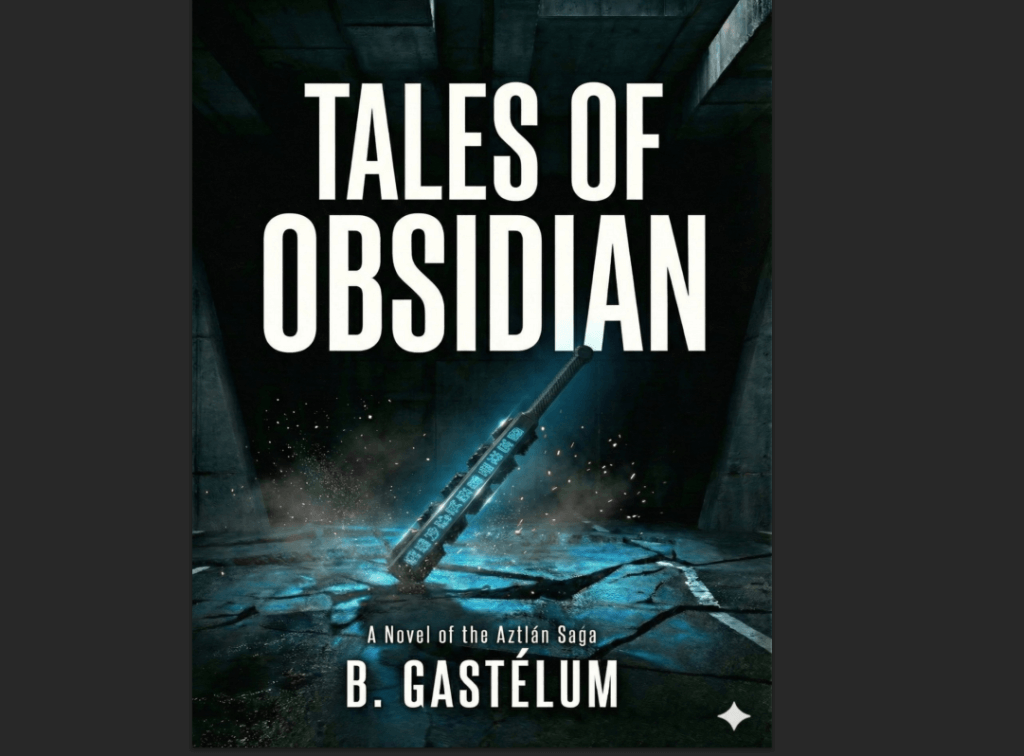
Tales of Obsidian- Review
Tales of Obsidian is not a light or comfortable book. It is dark, heavy, and powerful. From the very first pages, the author makes it clear that this story is not about heroes winning easily or evil being punished in a simple way. This is a story about pain, memory, history, and the cost of carrying the past.
The novel takes place mainly in Mexico City, but not the city we usually see in travel photos. This city feels alive, ancient, and dangerous. It is built on layers of history, and those layers never sleep. The author uses the city almost like a character itself—concrete, tunnels, old houses, and streets all feel like they are watching, remembering, and waiting.
The story follows Mateo, a young man who lives a normal life on the surface. He boxes, goes to school, hangs out with friends, and worries about his sick grandfather. But slowly, Mateo begins to experience strange things: sounds that do not belong, visions, a constant hum in his head, and moments where reality feels thin and broken. These moments are not shown suddenly. They grow slowly, which makes them feel real and disturbing.
One of the strongest parts of the book is the relationship between Mateo and his grandfather, Don Agustín. The grandfather is not just an old man waiting to die. He is a keeper of forgotten knowledge, someone who understands that history did not end—it only changed its shape. Through him, we learn that ancient forces, beliefs, and wars are still alive under the modern world. His words feel heavy, like warnings passed down through generations.
The book mixes modern life with ancient mythology in a very natural way. Obsidian, stone, blood, and memory are repeated symbols throughout the story. They represent strength, sacrifice, and permanence. The author does not explain everything clearly, and that is a good thing. Like Mateo, the reader must feel confused, afraid, and unsure. This makes the experience stronger and more immersive.
Mateo’s friends, Juan and Jimena, also play important roles. Juan brings humor and humanity to the story, while Jimena represents logic and reason. Their reactions make the story feel grounded and real. When something terrifying happens, their fear and disbelief match what the reader feels.
As the story moves forward, the danger becomes more physical and more real. Violence in this book is not glamorous. It is painful, shocking, and has consequences. When Mateo finally faces enemies connected to the ancient world, the fight scenes feel brutal and terrifying. You understand very clearly that he is not fighting normal people, and that fists and courage alone are not enough.
The writing style is strong and atmospheric. The author uses vivid descriptions, especially of sounds, smells, and textures. You can feel the cold stone, smell the incense, hear the drums, and sense the weight of history pressing down. Sometimes the language is intense, but it fits the story perfectly.
This book is about inheritance—not money or land, but responsibility. Mateo does not choose this path, but once he steps onto it, there is no way back. The story shows how the past demands to be remembered, and how ignoring it can be dangerous.
In conclusion, Tales of Obsidian is a deep, dark, and meaningful novel. It is not for readers looking for a simple or happy story. But if you enjoy books that mix mythology, history, horror, and modern life, this book is a powerful experience. It stays in your mind long after you finish reading, like a scar—just as the author promises in the foreword.
This is a book that feels lived in, not just written. It truly feels like a story that had to be told.
Rating: 4.9 / 5
Reviewed By-
M A R team
Freelancer.com